BYD Shark 6 vs Toyota Hilux NZ: Which Ute Fits?
Start with the Hilux SR5 Hybrid if regular heavy work and diesel refuelling fit your week. Try the Shark 6 Performance if you can plug in and want electric running. Both advertise 3,500 kg braked towing, but check the actual combination, licence and fitted equipment before ordering.

The verdict
Start with the Hilux SR5 Hybrid if regular heavy work and diesel refuelling fit your week. Try the Shark 6 Performance if you can plug in and want electric running. Both advertise 3,500 kg braked towing, but check the actual combination, licence and fitted equipment before ordering.
Buy the BYD Shark 6 if
You can regularly plug in and want electric running from a ute.
Buy the Toyota Hilux if
You prefer diesel refuelling and a conventional work-ute routine.
| Dimension | BYD Shark 6 | Toyota Hilux |
|---|---|---|
| Powertrain | BYD Shark 6Petrol plug-in hybrid | Toyota HiluxDiesel mild hybrid |
| Listed price | BYD Shark 6NZ$78,990 plus on-road costs | Toyota HiluxNZ$60,990 Toyota Driveaway Price example |
| Braked towing | BYD Shark 6Up to 3,500 kg | Toyota HiluxUp to 3,500 kg |
| Charging | BYD Shark 6External charging, 80 km WLTP electric range | Toyota HiluxNo external charging |
| Output | BYD Shark 6350 kW and 700 Nm | Toyota Hilux150 kW and 500 Nm |
Which ute suits your week?
Start with the Toyota Hilux SR5 Hybrid if regular heavy work and diesel refuelling suit you. Try the BYD Shark 6 Performance if you can plug in and want electric running. Both advertise 3,500 kg braked towing, but the vehicle, trailer, fitted towbar and licence limits all need checking for your actual combination.
Take the people and equipment you normally carry to both test drives. Check the service location, the complete delivered price and how each ute fits your parking space before committing.
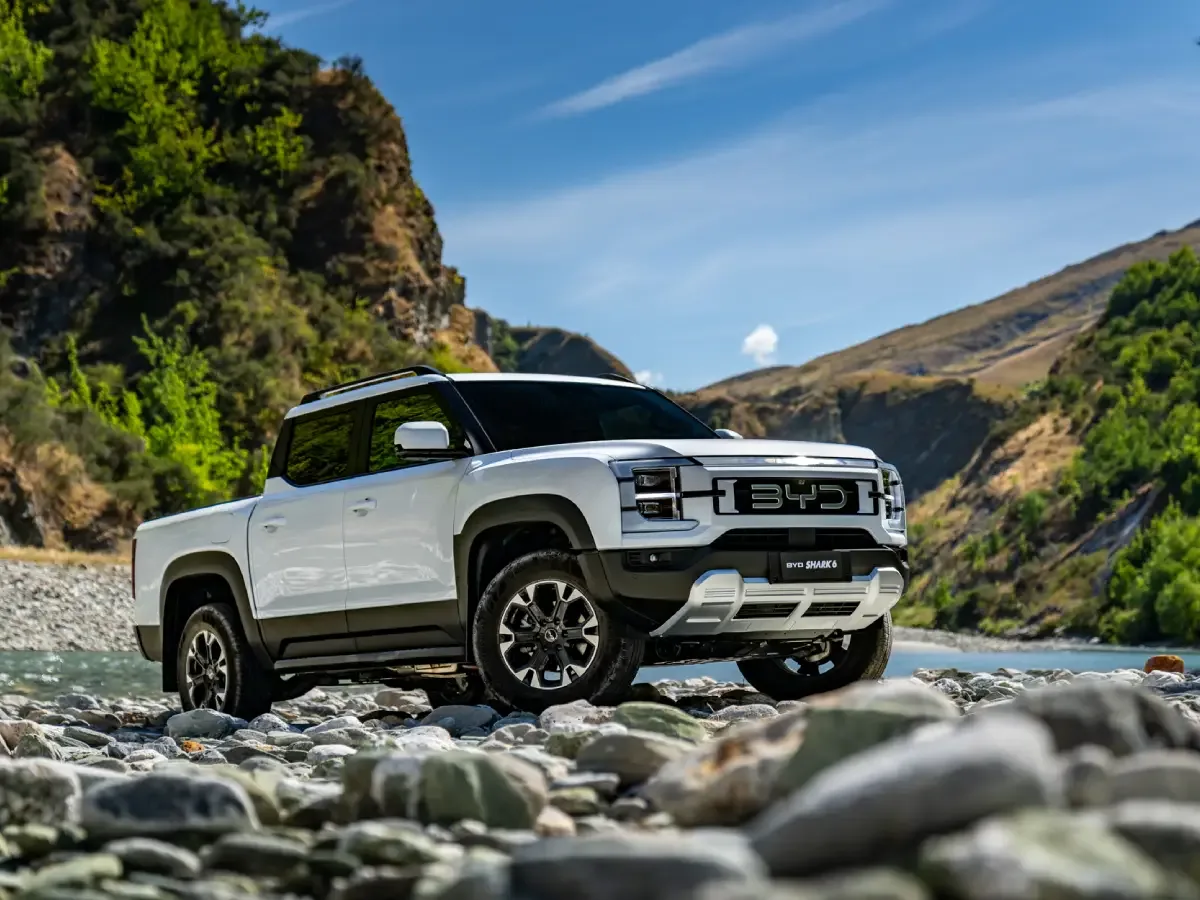
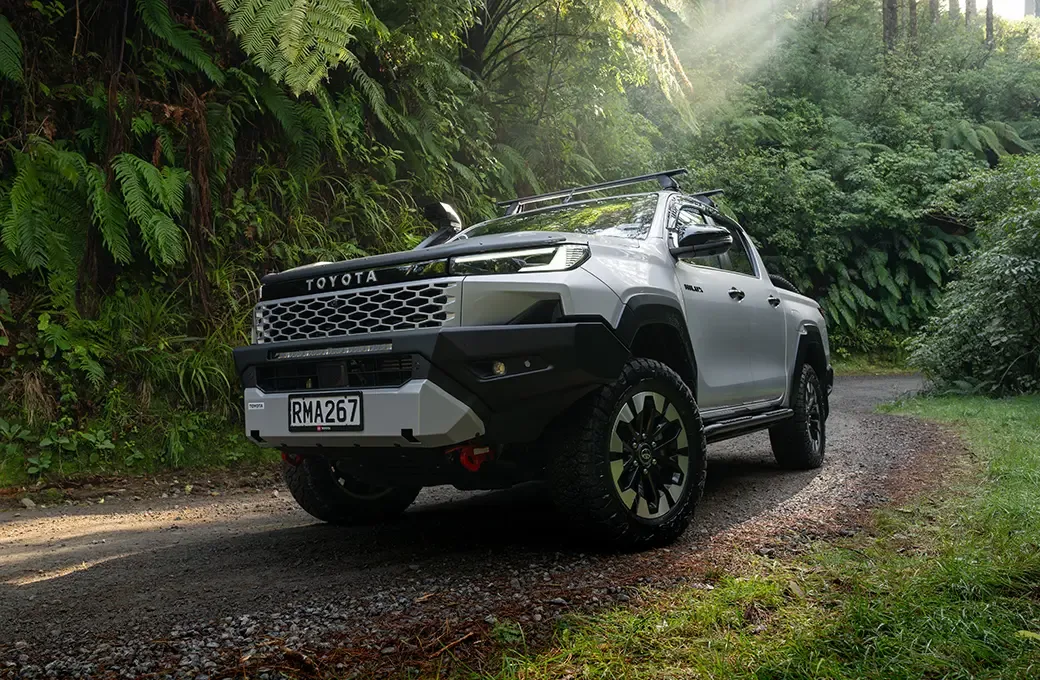
The two New Zealand utes
This comparison uses the BYD Shark 6 Performance AWD and the Toyota Hilux SR5 Hybrid 4WD double-cab ute. BYD lists the Performance from NZ$78,990 plus on-road costs. Toyota advertises an automatic SR5 double cab at NZ$60,990 Toyota Driveaway Price in its current finance example. Those price bases differ: ask for cash driveaway quotes for the precise vehicles and fitted tow equipment. Prices and source pages were checked on 16 November 2026. Ask the Toyota dealer to put the SR5 Hybrid specification on the quotation; finance examples have separate conditions and are not cash prices.
Towing and powertrain: read the limits together
Both brands publish up to 3,500 kg braked towing for these variants. A maximum tow rating is only one limit: the laden ute, occupants, tray equipment, towball load, trailer and any combined-mass ceiling all matter. Get the VIN-specific gross vehicle and combination ratings and the approved towbar paperwork before agreeing to a heavy-tow purchase. The Shark is a petrol plug-in hybrid; the Hilux is a diesel mild hybrid, not a plug-in. A tow rating does not guarantee you can load the vehicle to its maximum at the same time. Ask for the calculation on the vehicle as delivered.
| Attribute | BYD Shark 6 | Toyota Hilux |
|---|---|---|
| towing capacity | BYD Shark 6BYD NZ lists up to 3,500 kg braked towing. | Toyota HiluxToyota NZ lists 3,500 kg braked towing for the SR5 Hybrid. |
Also noted
- BYD Performance outputBYD NZ lists combined output of 350 kW and 700 Nm.
- Hilux SR5 Hybrid outputToyota lists 150 kW and 500 Nm from the 2.8-litre turbo diesel with mild-hybrid assistance.
- BYD chargingThe NZ specification identifies Type 2 AC and CCS2 DC charging for Performance.
- Licence and loadNew Zealand towing rules depend on the licence and the actual combination; check before travel.
Check the tray, cabin and real load
The headline figures do not show whether a toolbox, pram, canopy or crew fits your working day. Bring the items you use to both dealers and inspect each finished vehicle with the accessories you need. BYD lists Performance kerb mass of 2,775 kg and a 3,500 kg gross vehicle mass; subtracting these gives 725 kg of nominal headroom before people, cargo and accessories. That subtraction is not an independently measured payload and does not establish a compliant trailer combination. Even before towing, accessories change the weight available for passengers and equipment.
Fuel, charging and road-user charges
BYD lists an 80 km WLTP electric range for the Performance. Treat it as a test-cycle figure, not a guarantee with a trailer, at motorway speed or in winter. The Hilux refuels with diesel and does not require plugging in. NZTA lists road-user charge rates by vehicle category; the applicable category, declared weight and transaction fees need to be checked for each actual vehicle. Include fuel, electricity, servicing, tyres, insurance and finance before comparing total costs. Actual energy use depends on speed, weather, terrain, towing and how often you charge the plug-in hybrid.
Safety, sources and test-drive checks
ANCAP publishes 2025-tested five-star results for the Shark 6 and the current Hilux, subject to the variants and conditions in each report. Ratings do not replace checking child-restraint positions or the exact build. This is a sourced desk comparison, not a loaded towing test: arrange drives on your regular route and ask the dealer to confirm weights, pricing and warranty in writing. Compare written warranty terms, inspect service locations and bring your usual passengers and equipment on both test drives. Ask to see the current vehicle-specific safety and child-seat information.
Frequently asked questions
- Can the Shark 6 and Hilux tow 3,500 kg?
- Both compared variants advertise 3,500 kg braked towing. The actual vehicle, trailer, towbar, combined-mass and driver-licence limits must all be met.
- Does the Hilux SR5 Hybrid plug in?
- No. The compared Hilux uses a diesel engine with mild-hybrid assistance. The Shark 6 Performance is a plug-in petrol hybrid.
- Are the two prices directly comparable?
- No. The BYD figure excludes on-road costs, while Toyota describes a driveaway price. Ask both dealers for matching written cash quotes.