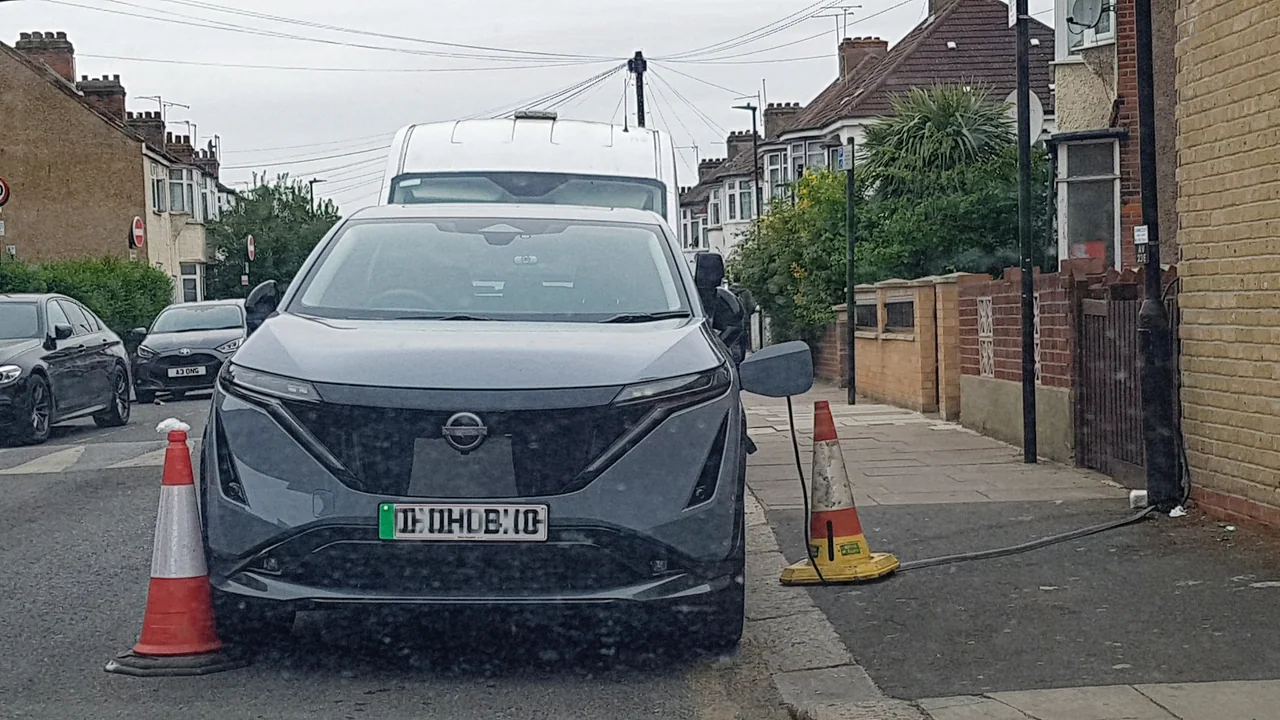
Qualifying embedded cable channels can avoid a separate planning application. Highway-authority authorisation still applies, and the change does not reserve a public parking space.
England’s planning rules changed on 21 October for a specific home-charging arrangement: a pavement-embedded channel that lets a cable cross the footway from a home to a parked electric car. The Department for Transport says drivers could save up to £300 on installation; this is not a grant or guaranteed saving.
Class F covers a cross-pavement solution installed by, on behalf of, or with the authorisation of, a highway authority. It means a channel embedded in the pavement, not a loose lead laid over the footway. The new Class F permitted-development right does not apply within a scheduled monument, the curtilage of a listed building, or a conservation area; other planning or heritage requirements may apply there.
Your council still matters
The change removes one planning requirement; it does not create an automatic right to cut into a pavement. Highway-authority authorisation and any other local conditions still matter.
North Northamptonshire Council’s page, last updated on 7 October and reviewed on 21 October, said its cross-pavement trial had not yet launched. The council said it would publish eligibility, costs, licence and grant information when it does. It also says participants must be able to park legally and safely outside their home and cannot reserve a public-road space. This is one council’s position, not a national timetable.
Check before you plan an installation
Before commissioning work, ask your local highway authority whether a scheme covers your address, what approval and costs apply, and whether a protected location is affected.
The government also opened separate consultations on tenants’ and leaseholders’ access to home charging and on charging in buildings. These are proposals, not part of the pavement-channel permission; responses are due by 16 December 2026.
Sources: Department for Transport · legislation.gov.uk · North Northamptonshire Council