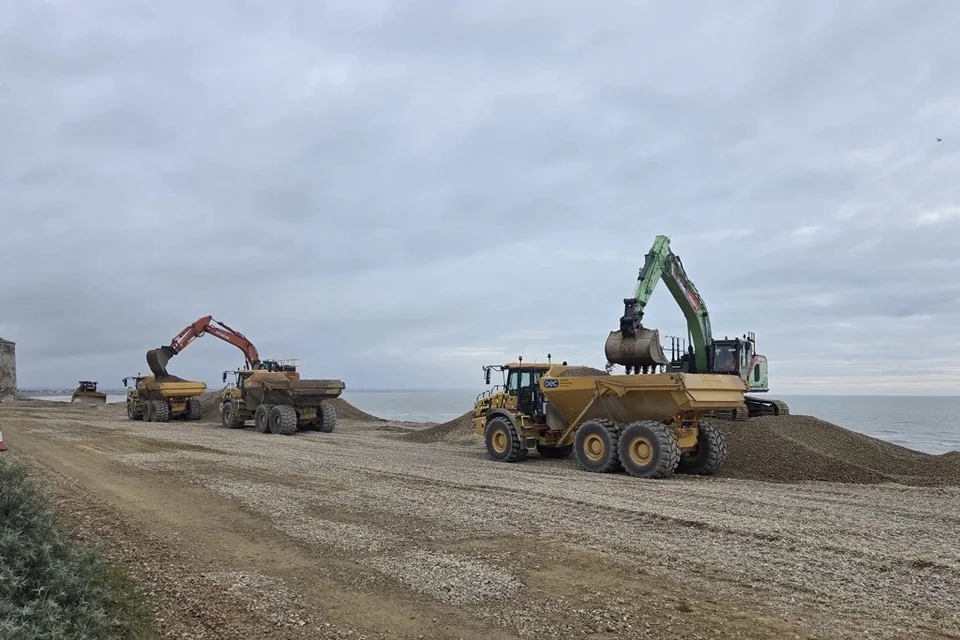
A five-day beach operation in Eastbourne used electric construction equipment alongside other machinery. The Environment Agency says the trial will inform later coastal projects.
From 12 to 16 October, the Environment Agency and industry partners moved shingle from White Point in Eastbourne to North-east Beach at Sovereign Harbour. The work formed part of the area’s ongoing coastal defence operations.
What the trial covered
The trial used electric excavation equipment alongside tipper trucks, hybrid bulldozers and four-wheel-drive vehicles. It was a mixed fleet.
The Environment Agency says electric machinery kept pace with its coastal teams and reduced air and noise pollution. Its 21 October release gives no numerical comparison of costs, energy consumption or productivity.
Charging is part of the job plan
For contractors, the deployment raises practical questions about how charging fits around the work cycle: where equipment can recharge, how much time is available between shifts, what site power is accessible, and how a team would cover a machine that needs charging or repair. Those are questions for future deployments; the release gives no charging schedule or downtime figures for this trial.
The Environment Agency says the results will inform future decisions on lower-emission equipment for beach management, coastal construction and flood-risk work. Published operating data from later jobs would help show how the approach performs over longer periods and at other sites.
Sources: Environment Agency